
Green money poster behind the Condo Counter story, a Miami Beach condominium and homeowners association fraud watch
Condo Counter, the condominium fraud and HOA theft watch built in Miami Beach

The watch on a condominium’s money.

Cash, the budget, what came in, what went out, and the invoice behind each bill. One strict format, so a missing page stays visible.

Condo Counter app icon for condominium and homeowners association theft investigation in Miami, Miami Beach, and Miami-Dade County

Condo Counter started in Miami Beach, in the middle of a run of association theft. Another building in the news. Hundreds of thousands of dollars. The state and the county stood up new task forces, and those desks were already buried. A unit owner here was living it. The ledger on his own unit did not match what he had paid. Money had left the building. The papers did not add up. He built the desk he could not find. The same thing can be happening in your association. You may only have the feeling that something is off. Condo Counter fills in those dots, and it tracks every one of them.

Miami Beach condominium at night, the building behind an HOA theft and fraud investigation

Operations

Operations is the front of the building. One page. The building, the law it is under, the four numbers, the three checks, and the people who sign. You do not hunt for them. They are already on the desk.
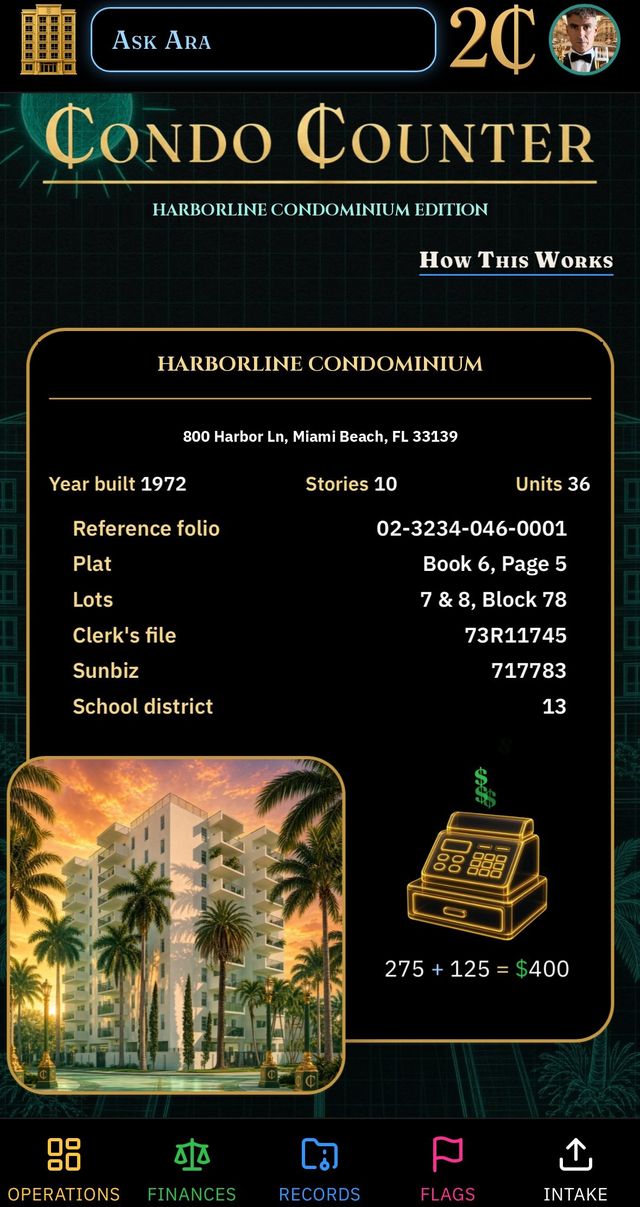
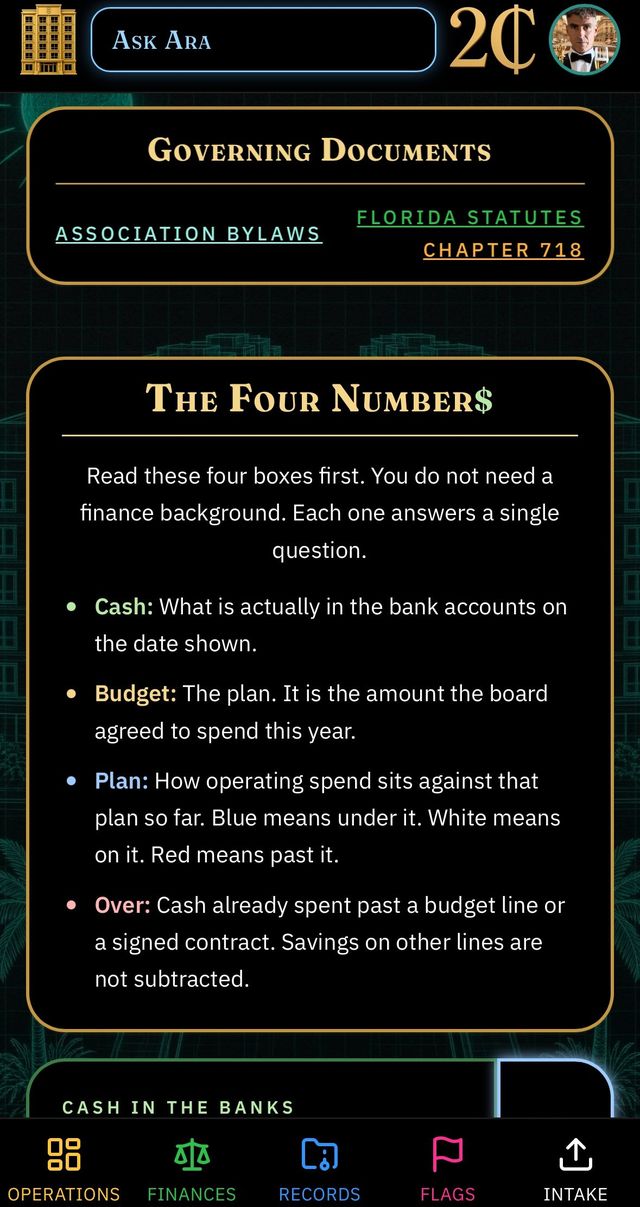
Miami Beach condominium operations card used in an HOA fraud investigation, showing the building, the year, the units, and how many association records are already on the desk
The card is the building itself. The year, the stories, the units, and how many files are already on the desk. The name and the address on this sample are Harborline. On a live association those lines are that building, and they stay put when you go deeper into the money. You always know which house you are standing in.
Florida condominium governing documents and chapter 718 opened beside the money during a homeowners association theft investigation in Miami-Dade
Above the numbers sit the rules those numbers have to obey. The bylaws. The Florida statutes, chapter 718. An owner opens them from the same page as the cash. The statute is not a link that sends you out of the building to go find it. The rule and the money are on one desk.
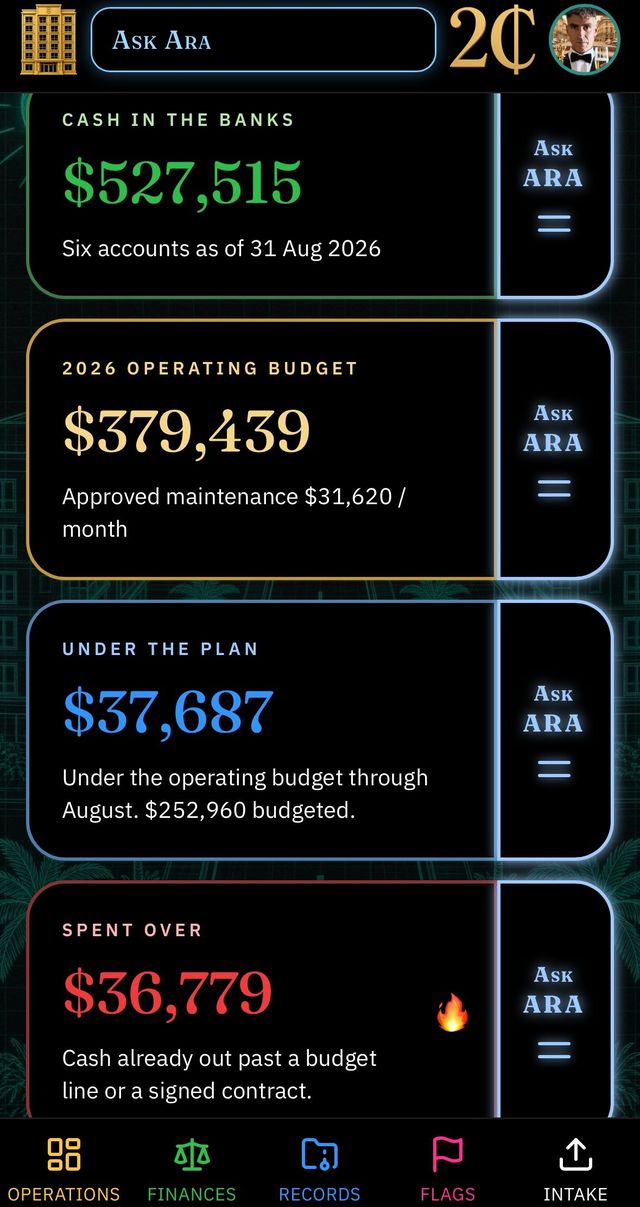
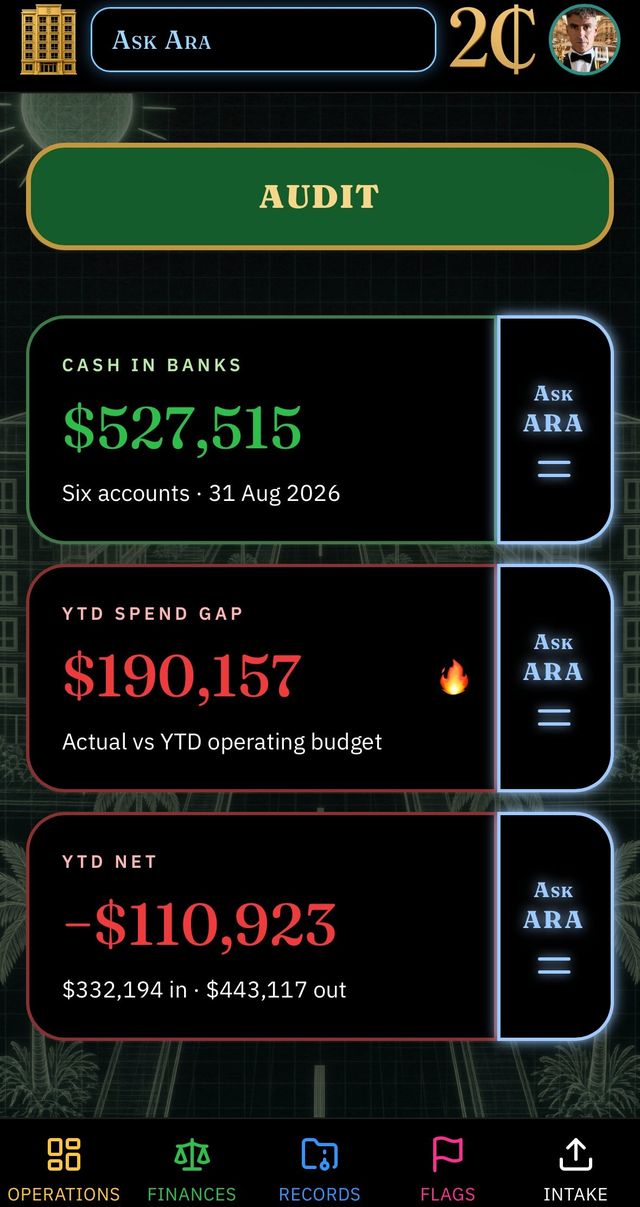
Four numbers for a condo fraud review: cash in the banks, the operating budget the board signed, spending still inside the plan, and cash already spent over the line
Read these four boxes before anything else. Cash in the banks is green. That is the money still in the accounts. The operating budget is amber. That is the plan the board signed for the year, not a guess and not last month’s spend. Under the plan is blue when the spending is still inside that signed budget. When the spending has gone past it, the box says so. Spent over is the cash already out past a budget line or a signed contract. Red means it is already past. These four are the first answer. They are not a decoration.
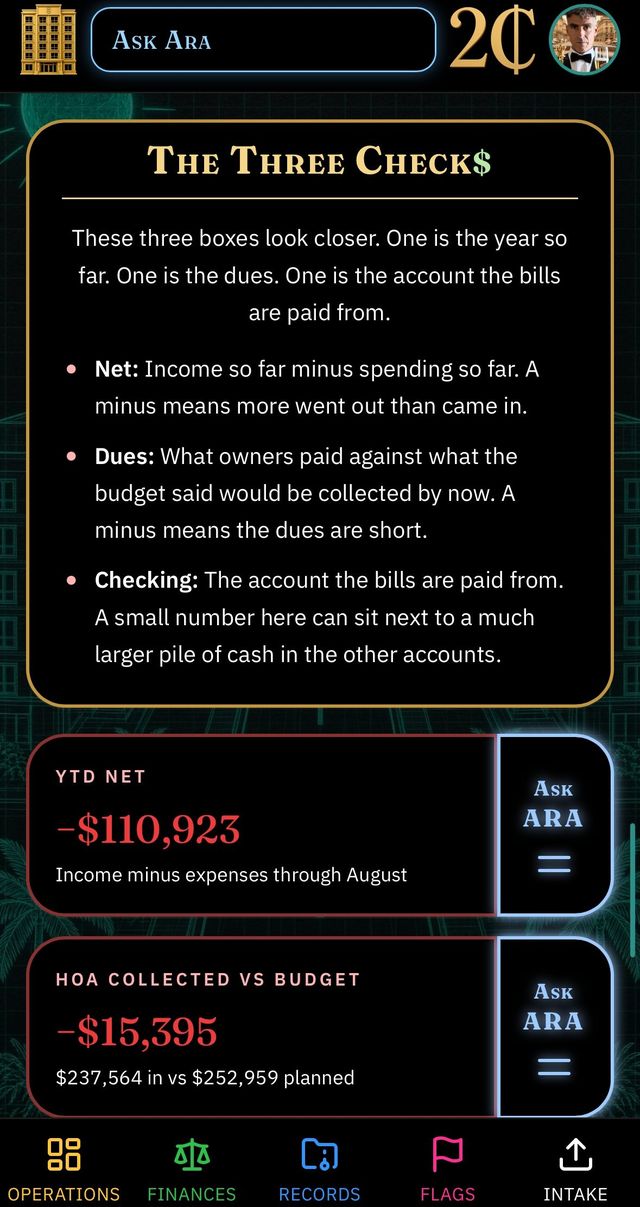
Three checks in a Miami condo theft investigation: association income, owner dues, and the operating account the property manager pays bills from
Under the four numbers are three checks. Income so far. The dues. The account the bills are paid from. Each one is a yes or a no against the paper. Income is what has come in. The dues are what the owners were supposed to pay. The operating account is the one the bills leave from. If one of them is off, it is off on this page, not in a drawer you have not opened yet.
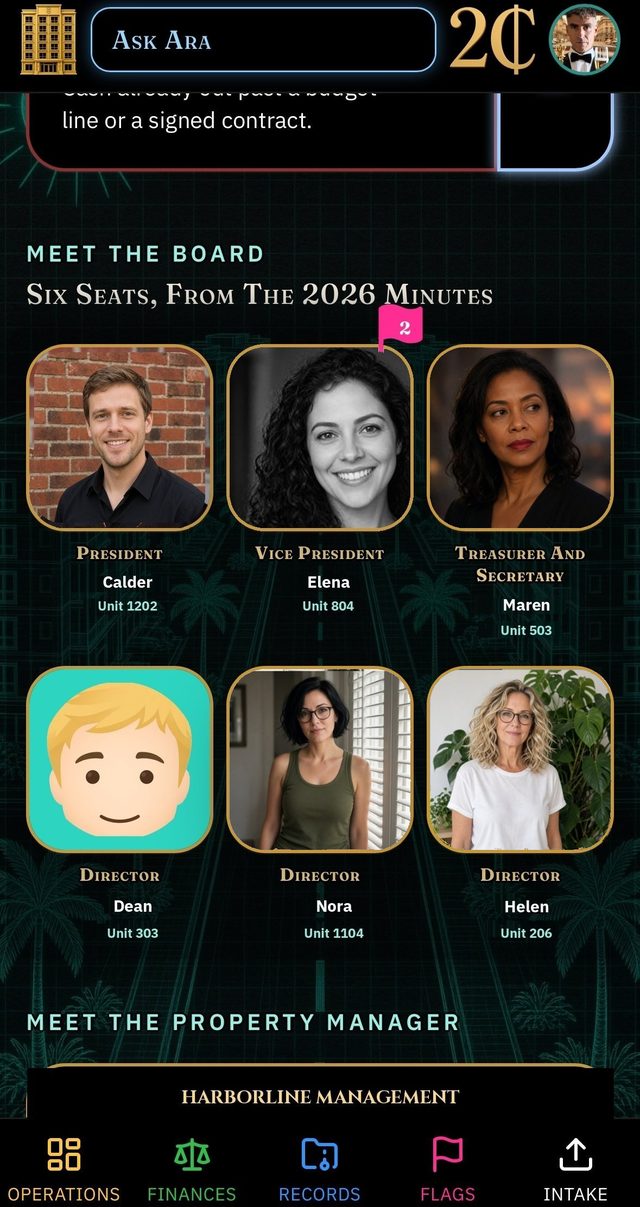
Condominium board members named beside the budget they signed, for an HOA embezzlement and fraud investigation in Miami Beach
The board sits on the same page as the money. The names and the seats stay on the amber frame. These are the people whose signatures are on the budget and the contracts. You do not open a second site to see who signed. The signature and the figure are already next to each other.
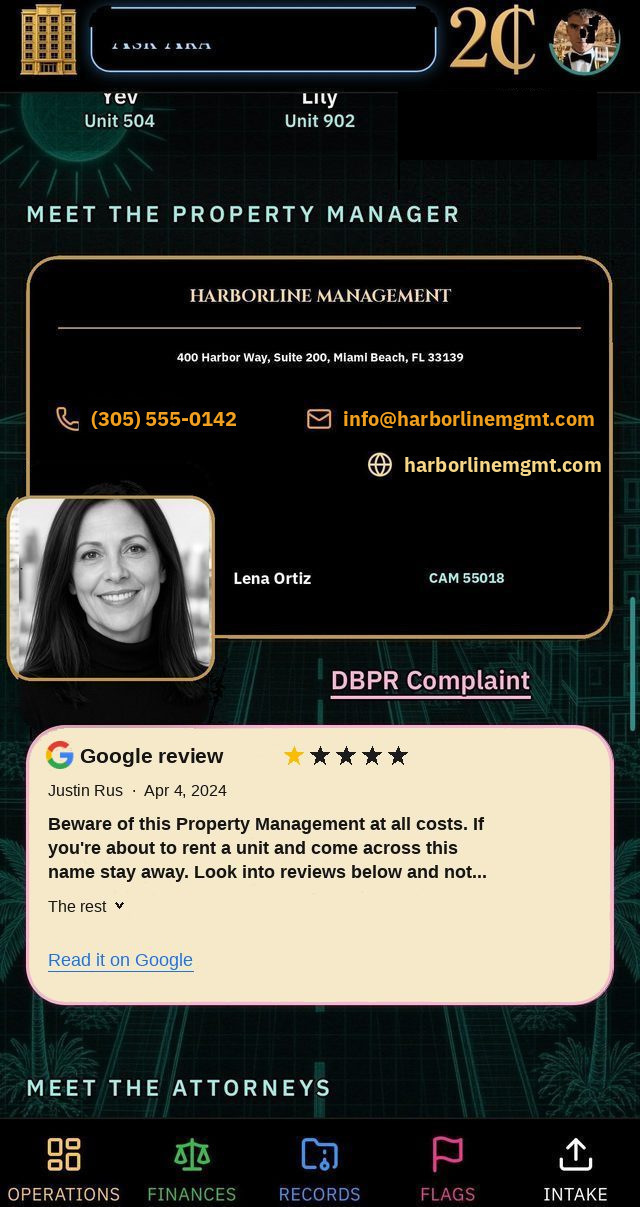
Property management company, license, and owner review on the same page as the money, for a property management theft investigation in Miami-Dade
The management company is on that page. The name, the license, and the review an owner left. The company that writes the checks is not a logo in a footer. It is a named desk, with a license number, and with what an owner already said about the work. The person moving the money is on the page with the money.
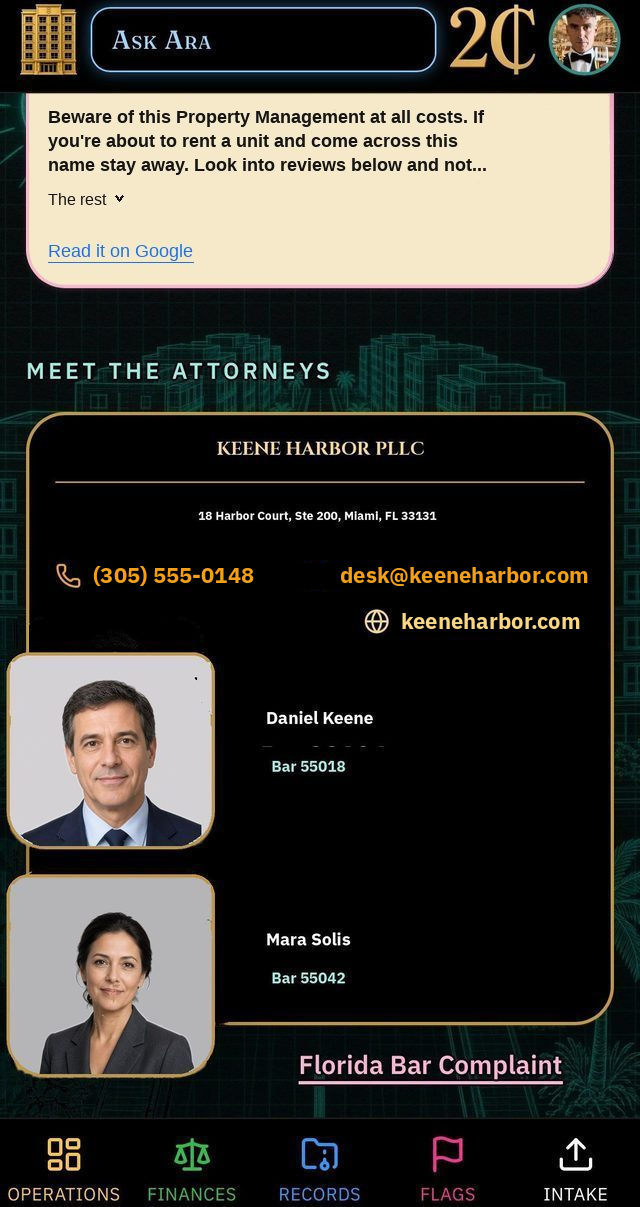
Association attorneys, bar number, and review next to the fees they are paid, in a Florida condominium fraud investigation
The firm the board hired is the last block on the page. The name, the bar number, and the review, in one place. The lawyer sits next to the money the lawyer is paid from. An owner can see who was hired without asking the manager for the letter.
Green money field behind a condominium finance desk used to follow HOA cash in Miami-Dade

Finances

Finances follows the cash after Operations has shown the four numbers. What came in. What went out. The budget beside the actual. A line in red is already past the plan or the contract. Nothing on this desk is a single total with the parts hidden.
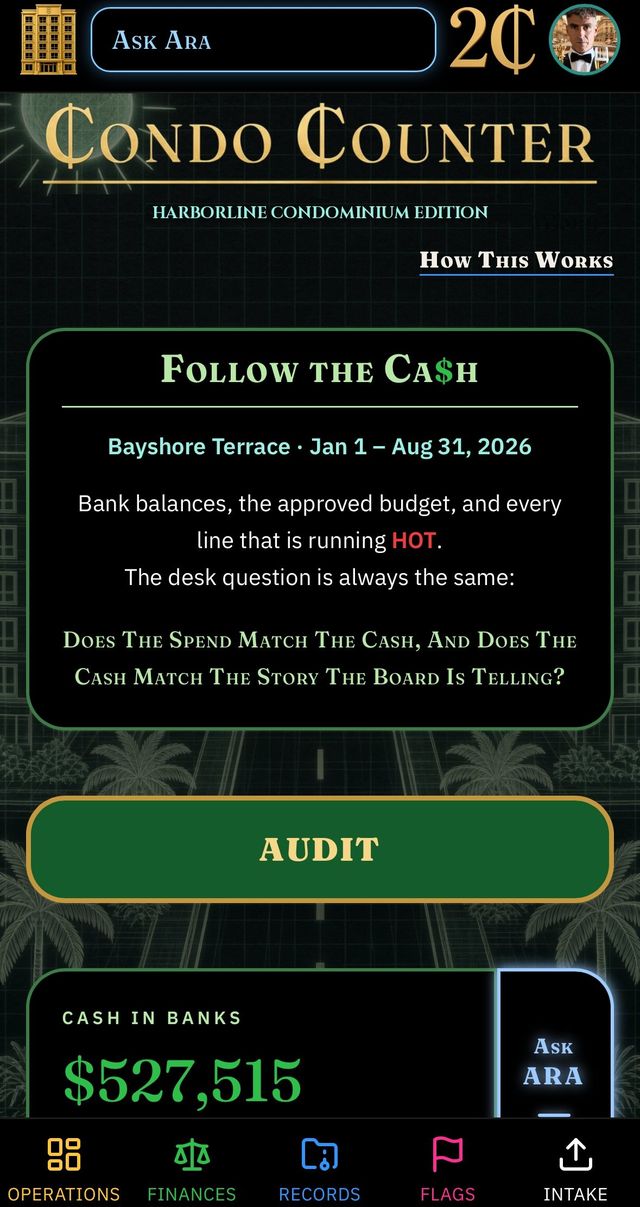
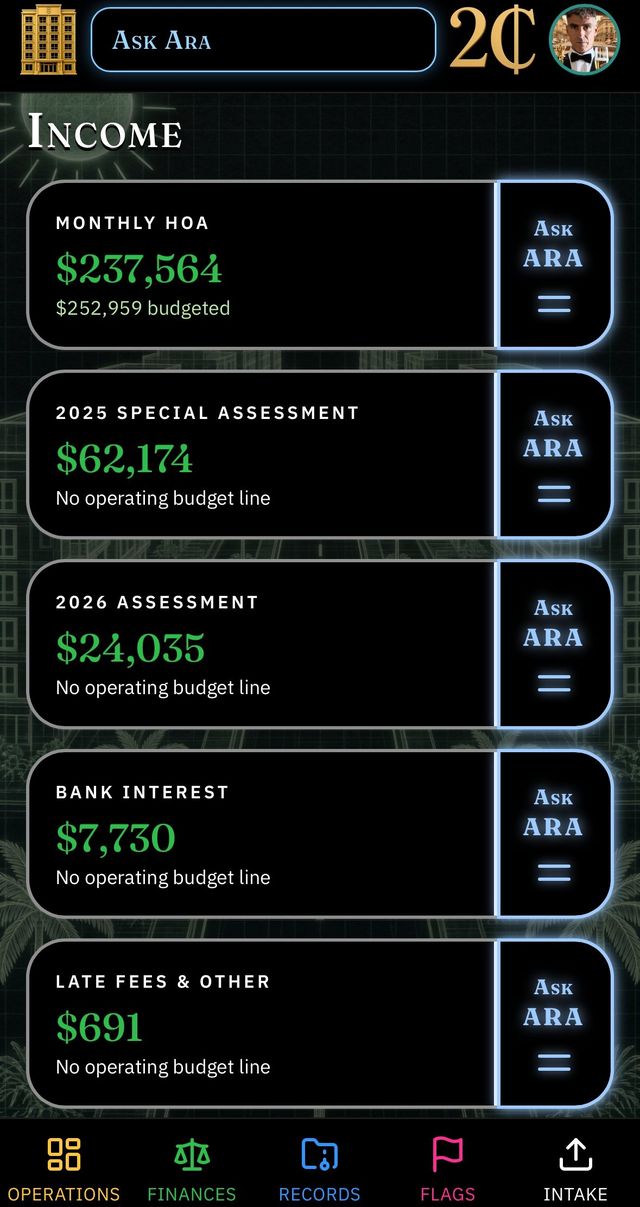
Follow the cash on a condominium finance desk, the first question in an HOA theft investigation: does the spend match the cash and the story the board told
Finances opens on Follow the Cash. That is the desk question. Does the spend match the cash, and does it match the story the board told? The page starts there. It does not start on a chart with the question buried under it.
Condo association income in Miami: monthly dues against the budget, with the special assessment kept off the operating line so it cannot hide a theft
What came in is the money that arrived. Monthly dues sit against the budget for those dues. The special assessment is on the page, and it is not pretending to be an operating line. Dues and a special assessment are not the same dollar. The page keeps them apart, so one cannot be used to explain the other.
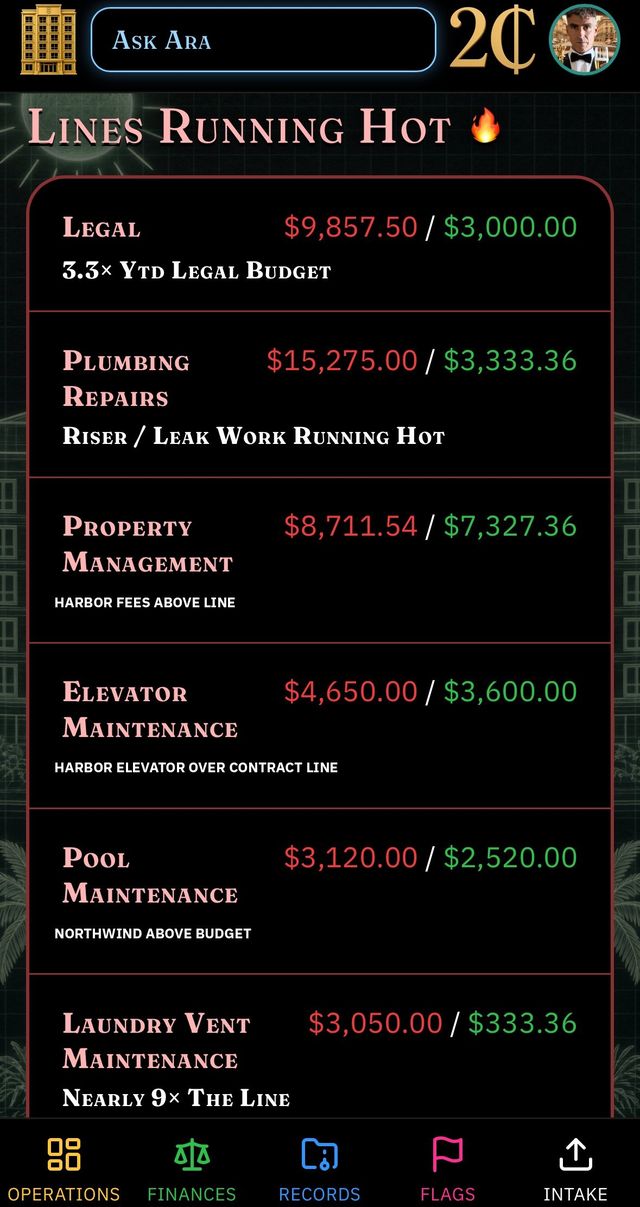
HOA budget lines running past the contract or the signed plan, marked red in a Miami Beach condominium fraud review
Red is already past the line. Green is still inside the budget or the contract. The note under the title says which comparison you are looking at. A red figure is not a mood. It is past a number the board already wrote down, or past a price a contract already named. You can see which one it broke.
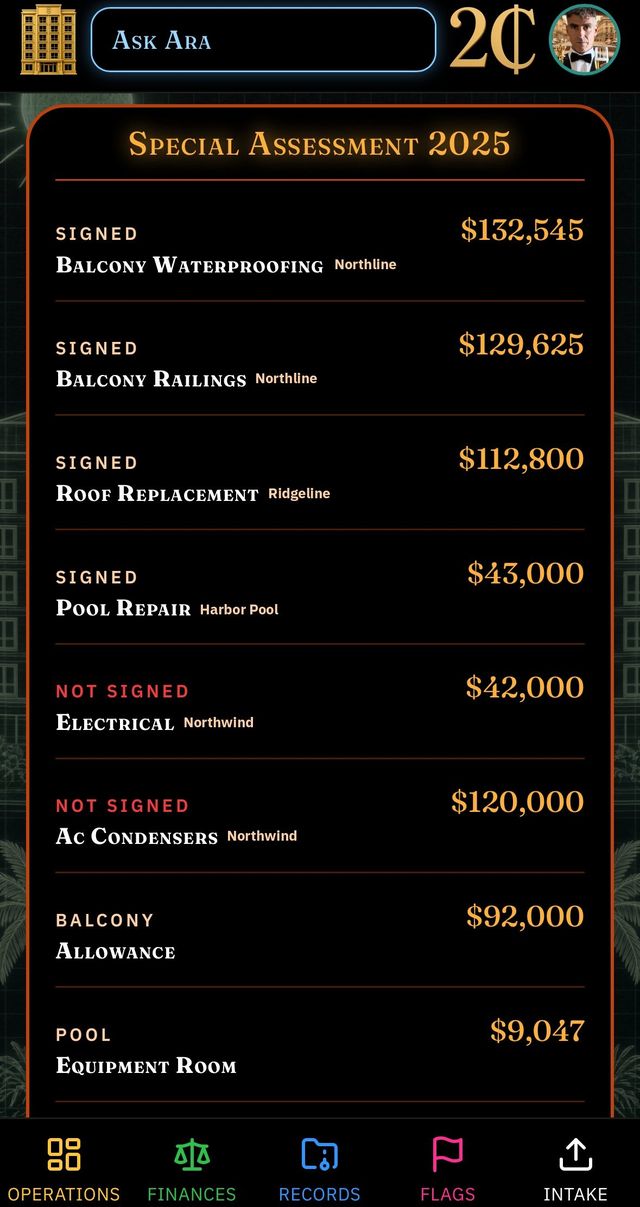
Special assessment fraud check for a Florida condominium: each job, the company hired, whether it was signed, and what that line was allowed to cost
The special assessment is not one lump. Each job is on its own line. Whether it was signed. The company on that line. The amount. An owner can see the work, who was hired to do it, and what that line was allowed to cost. A single assessment total is not allowed to hide the job.
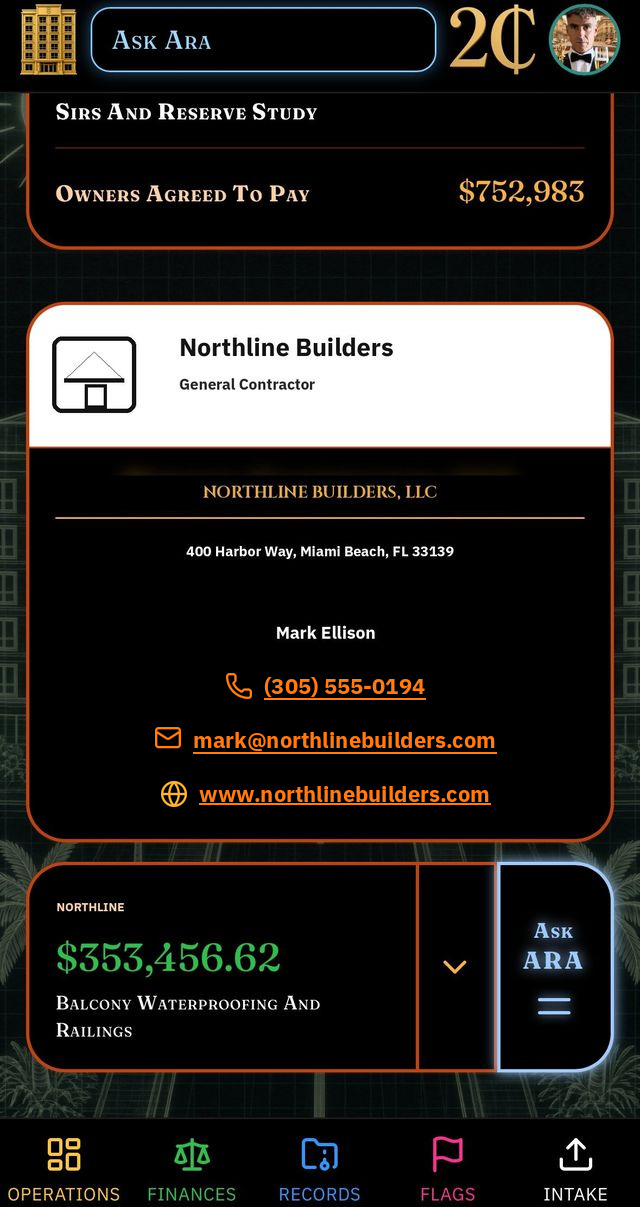
Contractor watch in a homeowners association theft investigation, with the contract price on the card instead of buried in a property manager’s file
The contractor is on the card. The cash for that job stays on the button under the name. You do not leave the card to find out what the contract was worth. The price is on the button. Open it, and the contract is the paper behind the name.
Audit the books of a Miami-Dade condominium association, with cash in the banks kept on the same page as the audit opinion
The audit stays on the finances desk, and cash in the banks stays on that page with it. The audit is not a PDF in a folder you have to remember. It is a page in the same walk. The opinion and the accounts can be read together, without leaving one to go find the other.
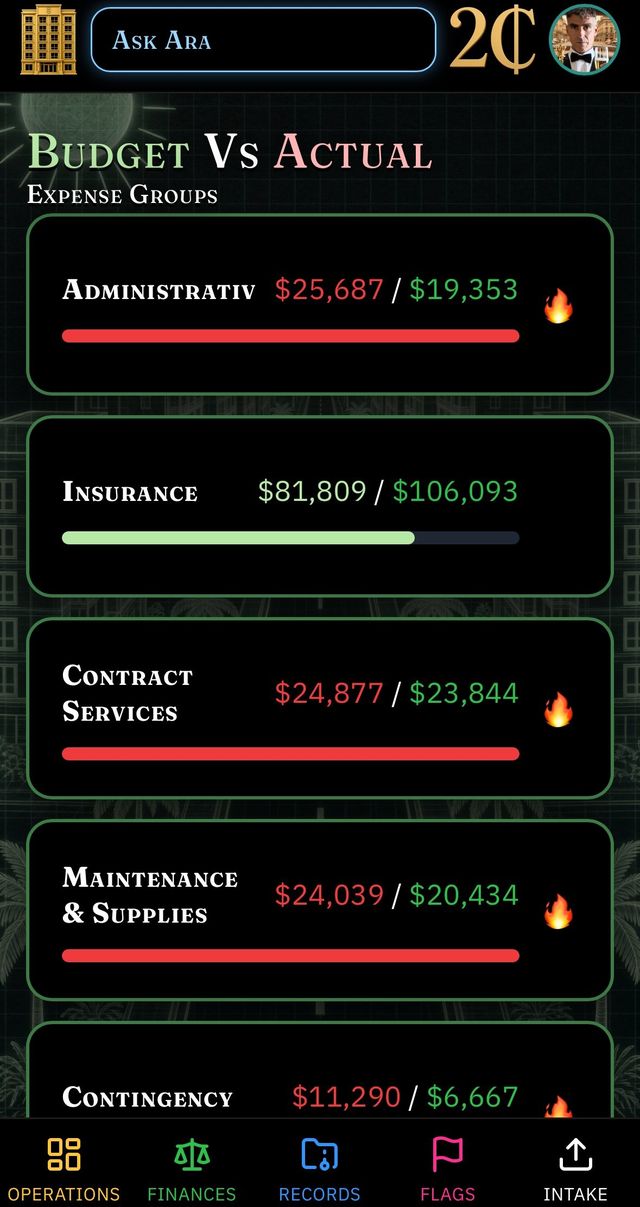
Budget versus actual for an HOA fraud investigation: each expense group beside what the board allowed and what was actually spent
Expense groups are the budget taken apart. What the budget allowed, next to what was spent. A group that has gone past its line shows it. A group that is still inside shows that too. The total at the top of the building is not allowed to hide a group that already broke.
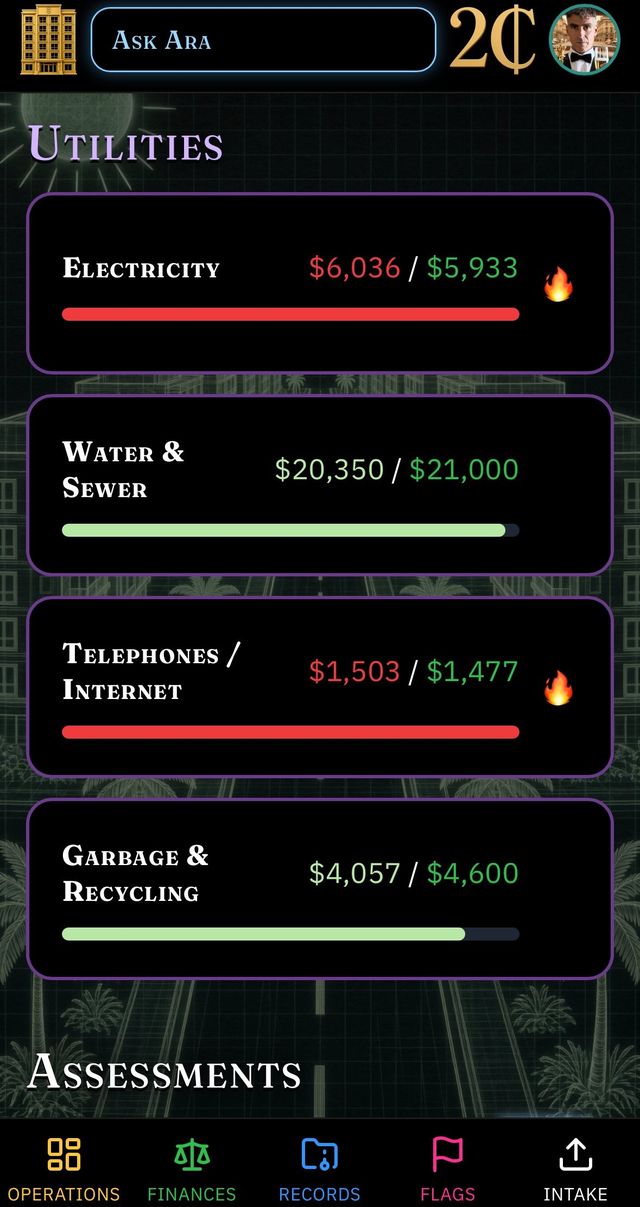
Condominium electric, water, and sewer bills each checked against the budget line, so a utility cannot hide inside a lump during a theft review
Electric, water, and sewer each stand on their own line, each one against the amount the budget allowed for that bill. A utility is not buried in a lump called operating. If the electric bill is the thing that ran past, the electric line is the thing that says so.
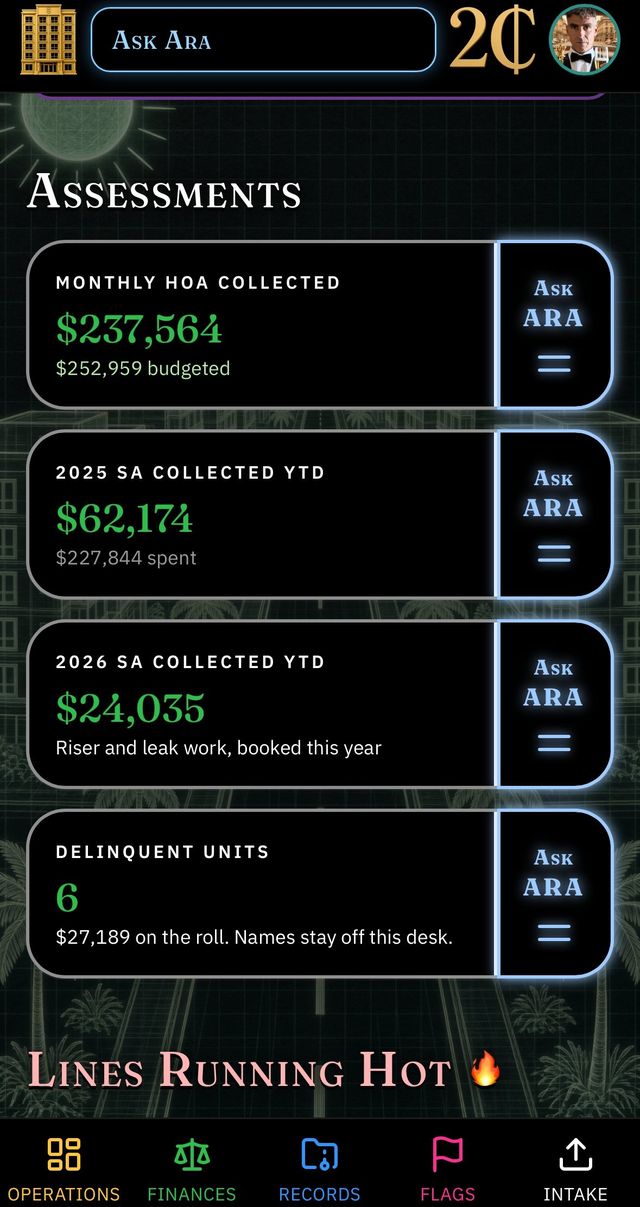
Homeowners association assessments in Miami Beach: dues collected against the budget, and special assessment cash already spent
The last of this walk is the collection. What was collected against what was budgeted, and what the special assessment has spent. Money that was supposed to come in. Money that did come in. Assessment cash that has already gone out. Three different facts, kept on one page, and not added into a single comforting number.
Records room poster for Florida condominium official records and a missing-page HOA investigation

Records

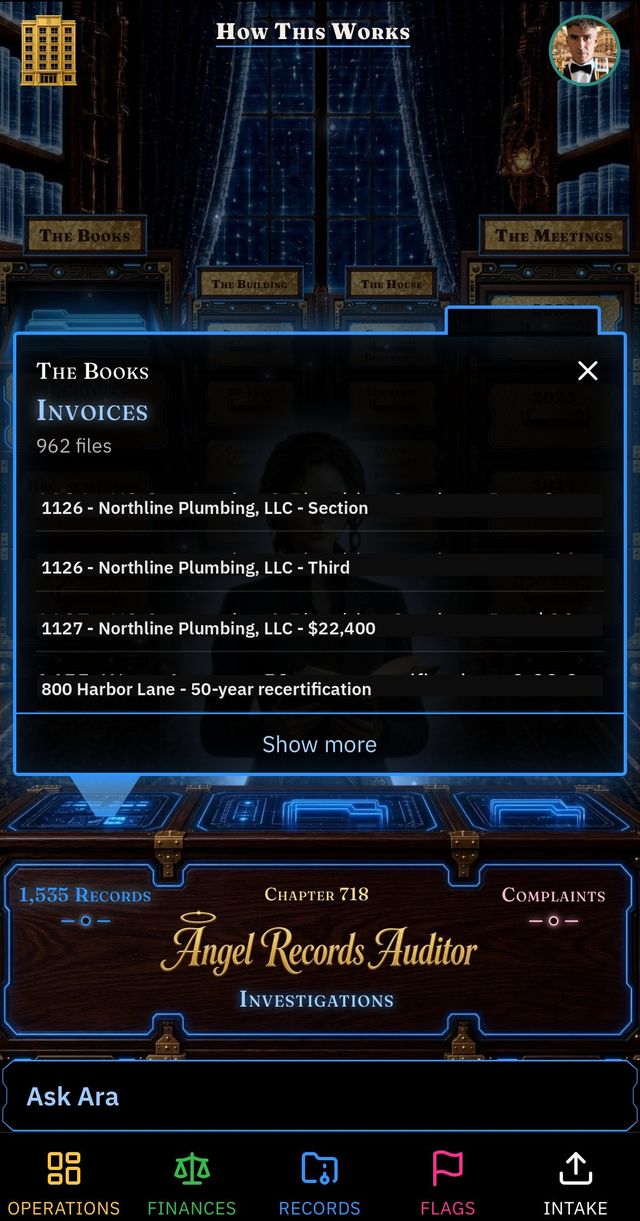
The records room is where the paper lives. Every cabinet is a kind of paper the association was supposed to keep. A number anywhere else in the app is only as good as the page behind it. If that page was never filed, the gap stays visible. Ara answers from the page on the desk. She does not answer from memory.
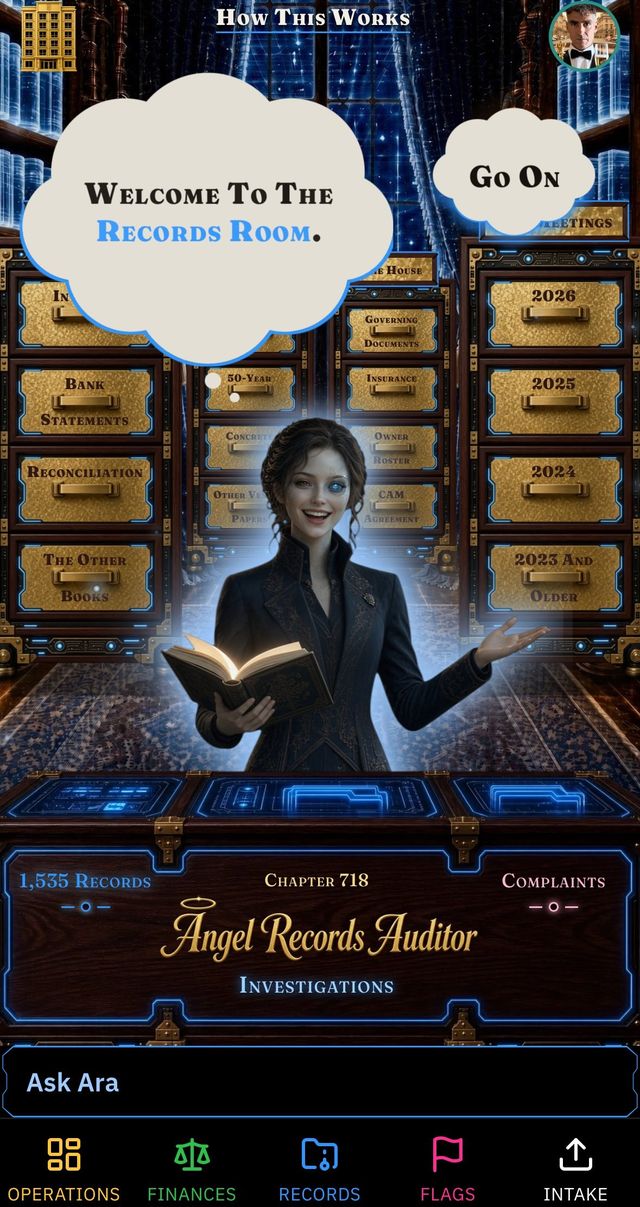
Condo Counter records room for a Florida condominium official-records request, where a missing invoice stays a missing page in an HOA theft investigation
Ara stands at the desk. The cabinets behind her are the association’s papers. Books, invoices, statements, meetings, contracts, the rest of the file. Ask her a number and she reads the page that number came from. If that page was never put in the room, she says she does not have it. She does not invent a figure to fill the hole. A missing page stays a missing page, where you can see it.
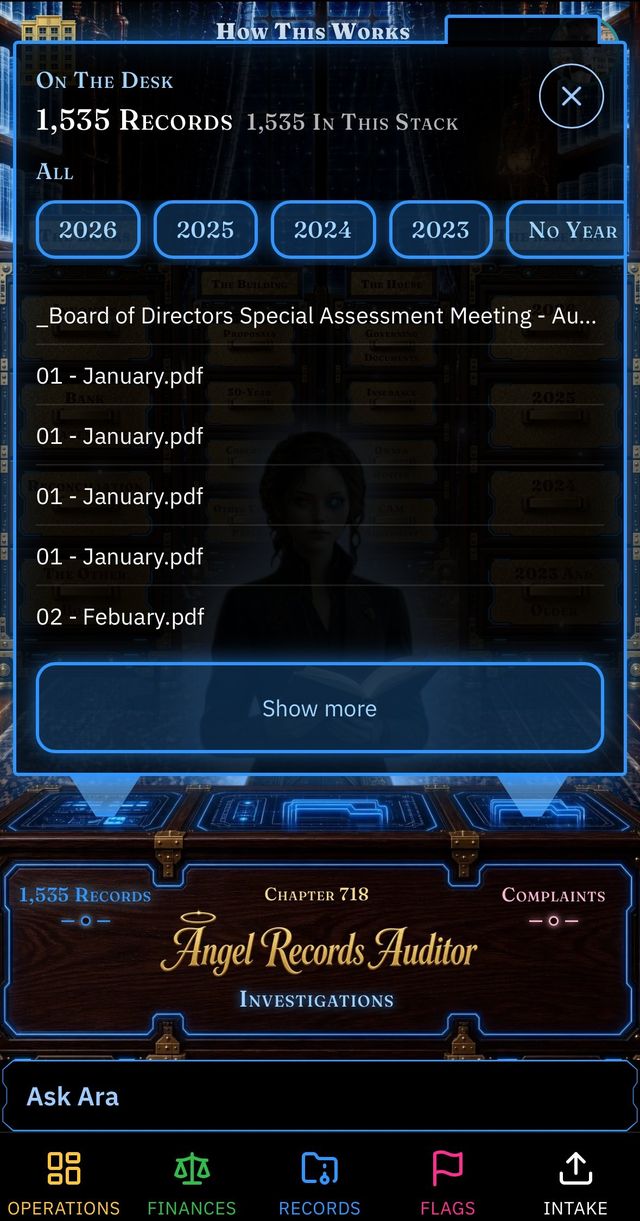
Association records stacked by year for a Miami-Dade condo fraud investigation, including a year with nothing filed
The stack on the desk is the whole room, laid out. Every record, sorted by year. You see the run of years before you open one. A year with nothing filed in it is a year you can see. The stack is not a search box that hides the count. The file is either in the year or it is not.
Open invoice drawer from a condominium records investigation, one association invoice at a time instead of a drive full of loose scans
Open a drawer and that cabinet’s papers are there, one file at a time. The invoices live this way. You open the file in the room. You do not take a zip home and you do not leave for a drive full of loose scans. One document, the one you asked for, on the desk, with the year and the cabinet it came from still in sight.
Ara’s file room, where a Florida condominium fraud answer has to come from a page in the cabinet

A.R.A.

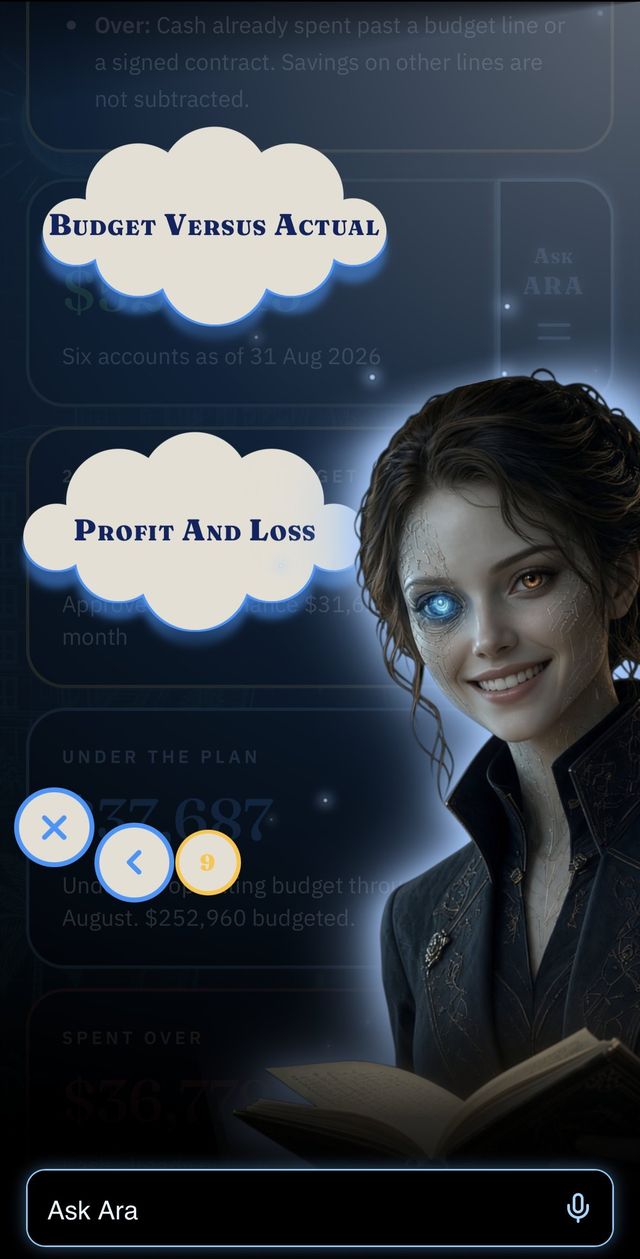
Ara is the Angel Records Auditor. She is the personal guide. She is not a chat window off to the side. Her cloud and her search bar open on the page you are already reading. The answer sits on that page. The paper she read sits under the answer.
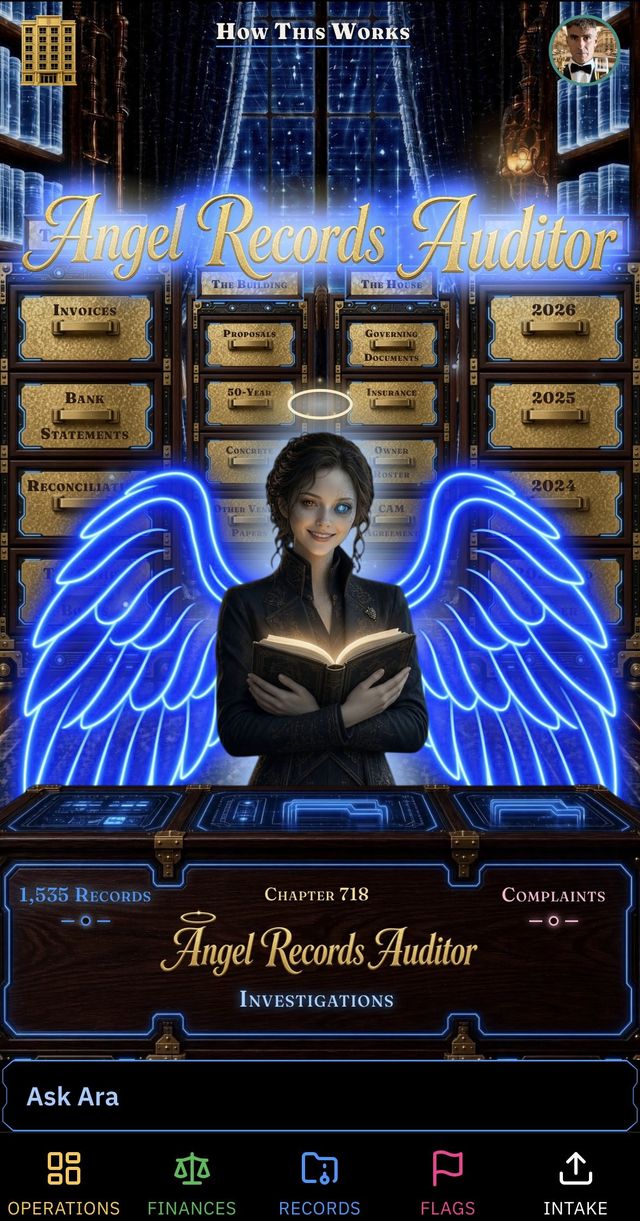
Ara, the Angel Records Auditor, at the cabinets of a Florida condominium, answering an HOA theft question from the page in the file
This is Ara at her desk. The cabinets are the papers. Ask Ara is the bar on that desk. You speak to her where the files are. She does not take the question away to another screen and come back with a paragraph that has no page under it. The question, the answer, and the cabinet are in one room.
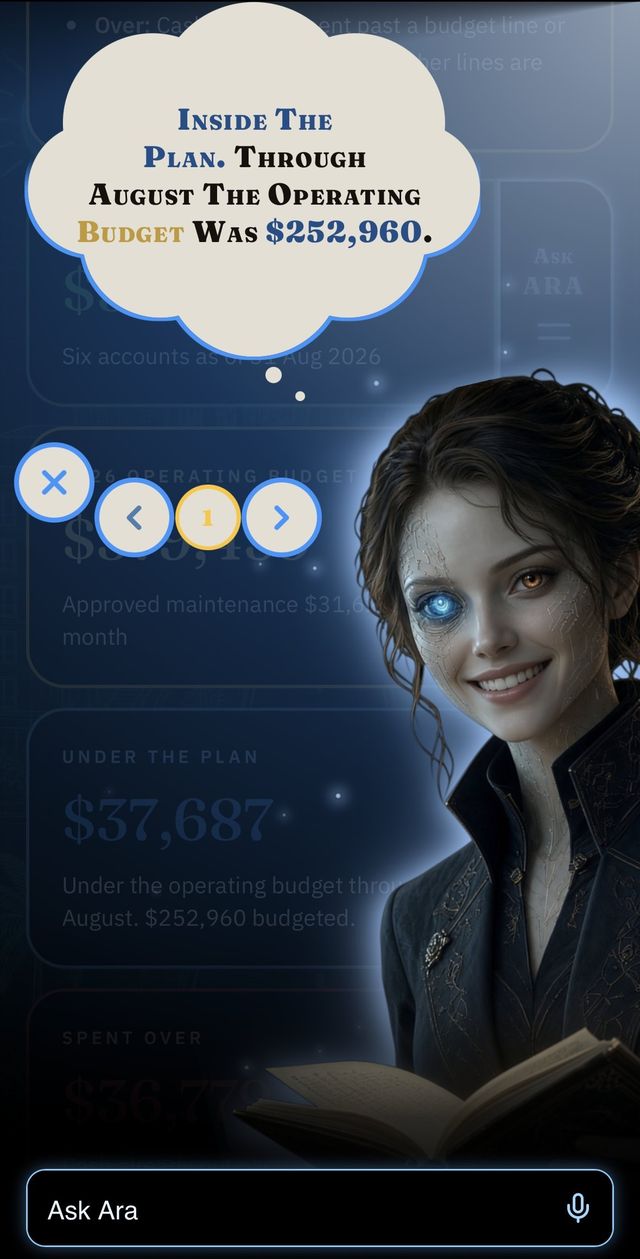
Ara stating whether a condominium figure is inside the board’s plan or already past it, in a Miami-Dade association fraud review
Her cloud answers on the page you are already reading. The number is in the cloud. So is the plain fact of whether that number is inside the plan the board wrote down. Under the plan, or past it. She says which. The cloud is the answer. It is not a menu of suggestions, and it is not a guess.
Ara opening the budget-versus-actual page behind a number, so a condo fraud answer stays attached to the association paper it came from
The number is not the end of it. She opens the page behind the number. Budget versus actual. Profit and loss. The line the figure came from is the page you are handed, so you can read the row and not only the sentence she spoke. The spoken answer and the paper it came from stay attached.
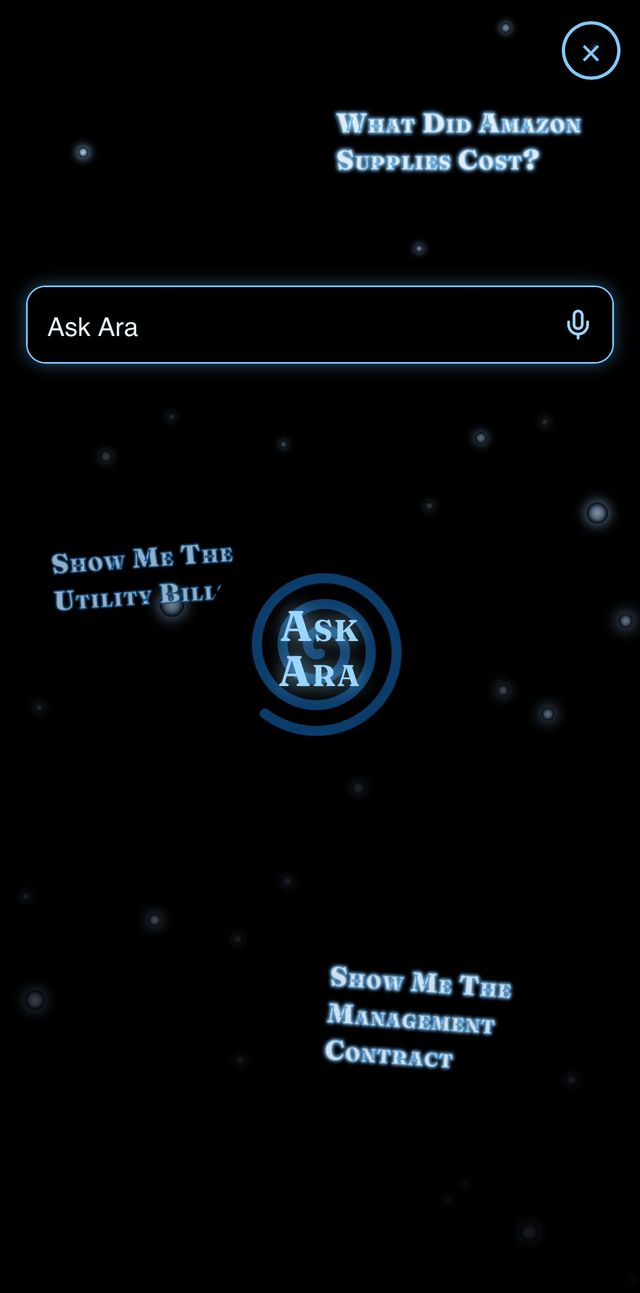
Ask Ara to pull a condominium bill or contract during a homeowners association theft investigation, or to say the paper was never filed
The search bar is how you ask. Ask what a bill cost. Ask her to show the contract. She goes to the paper that answers it. A bill comes back as that bill. A contract comes back as that contract. If the paper is not in the room, that is the answer she gives. She will not borrow a number from a different year to be helpful.
Fraud flags poster for a Miami Beach condominium: missing invoices, broken contracts, and figures that do not match

Flags

Flags mark the lines that need a look. They are not advice. A missing invoice. A contract that has gone past its price. A figure that does not match the page it claims to come from. Each flag has a weight. Critical. High. Watch. They stay up until a person clears them. They do not expire, and they do not clear themselves.
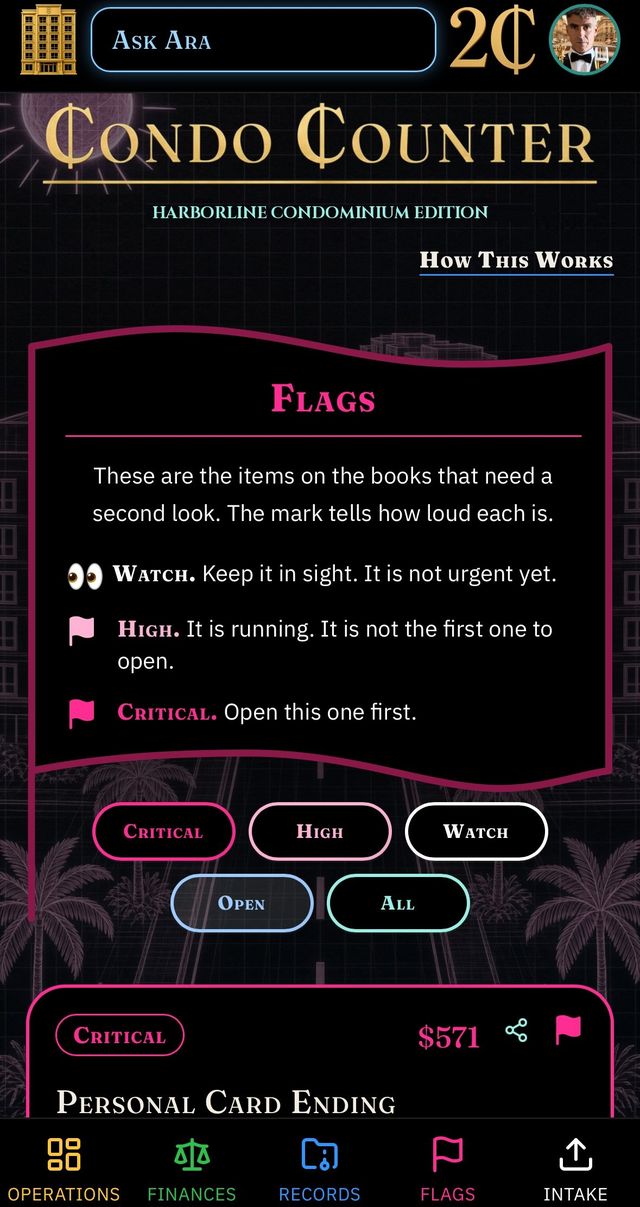

Fraud flags on a Miami Beach condominium: critical, high, and watch, each one naming the missing invoice or the contract that broke
Critical is the one that cannot wait. High is the one that is already wrong. Watch is the one that does not match yet and has to be kept in sight. A flag names the paper it came from, so the missing invoice or the broken contract is the thing on the list, not a vague warning. Clearing it is a decision a person makes. Leaving it up is also a decision. The list does not tidy itself overnight.
Intake poster for filing a new condominium invoice, letter, or door notice into an association theft file

Intake

Intake is how a new document gets onto the desk and into the right cabinet. The paper does not sit in a camera roll. It is named, and it is filed where that kind of paper belongs. It can be attached to a case.
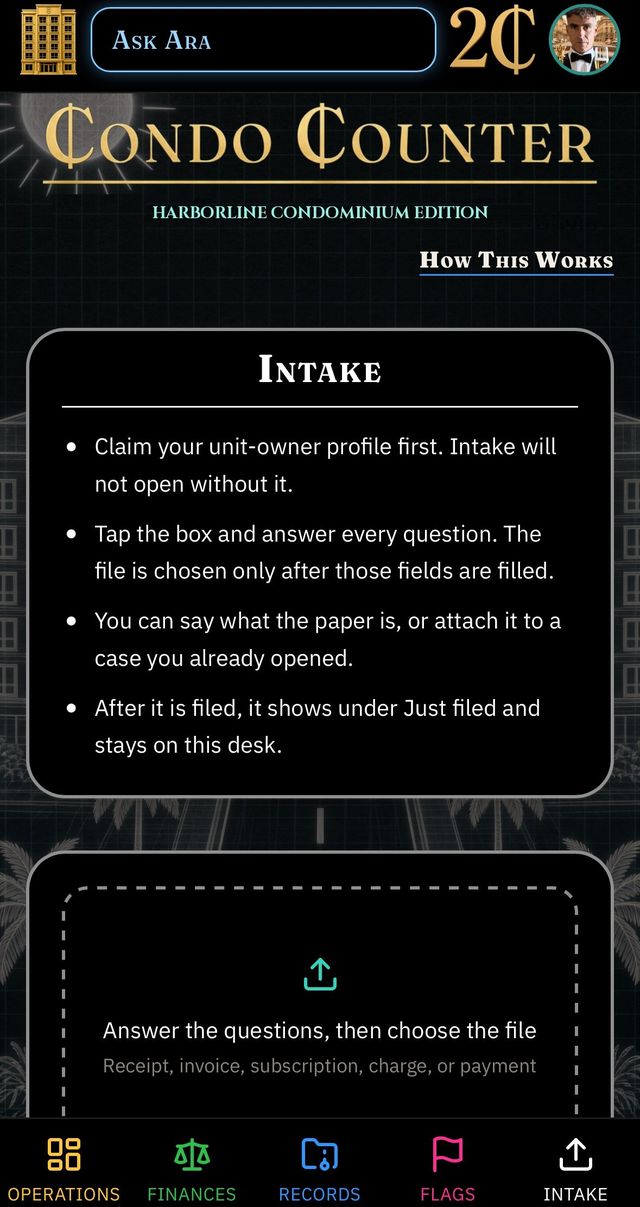

Intake of a new condominium document, an invoice, a letter, or a door notice, filed into the cabinet a property management theft investigation will read later
A paper comes onto the desk here. An invoice. A letter. A photo of a notice on a door. Intake asks what the paper is, and which cabinet it belongs in. Then it is in the room with the rest of the file. The same paper can be attached to a case, so the complaint and the document that proves it stay together. A page that arrives this way is a page Ara can read later. A page that never arrives is a page she will say she does not have.
Two Cents poster, the private room where Miami condo owners share the same association paper

Two Cents

Two Cents is not a public network. It is that one building’s room. The owners in that association, and the papers already on the desk. Nothing here is posted to the street. A thought stays inside the building it was said in.
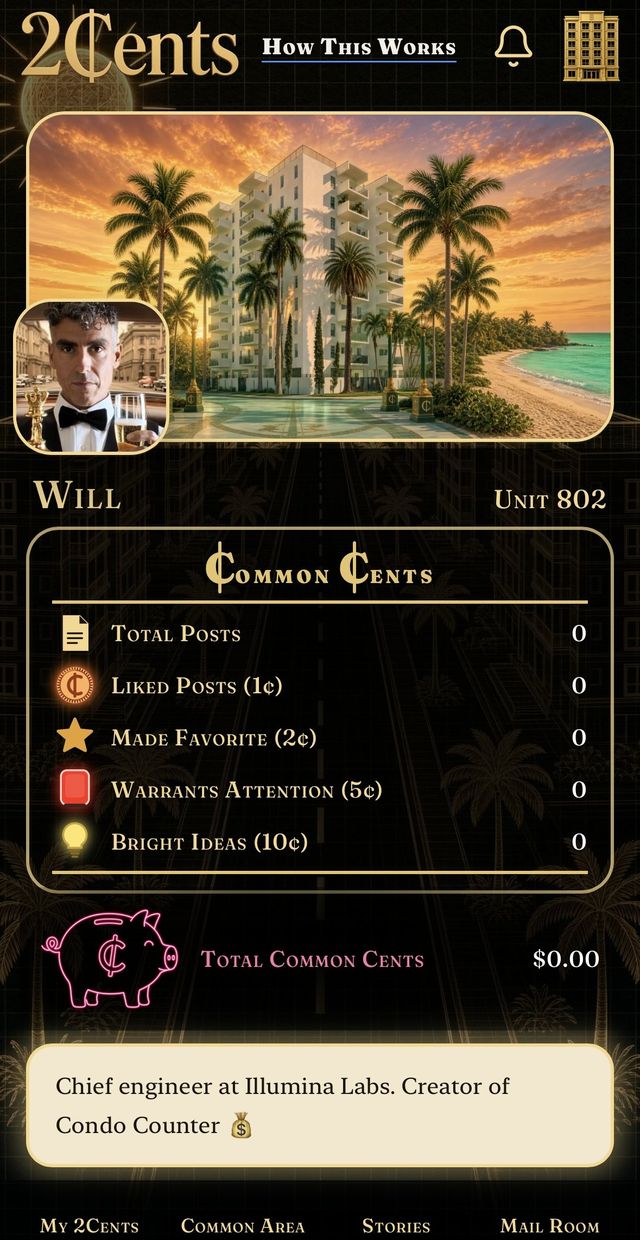
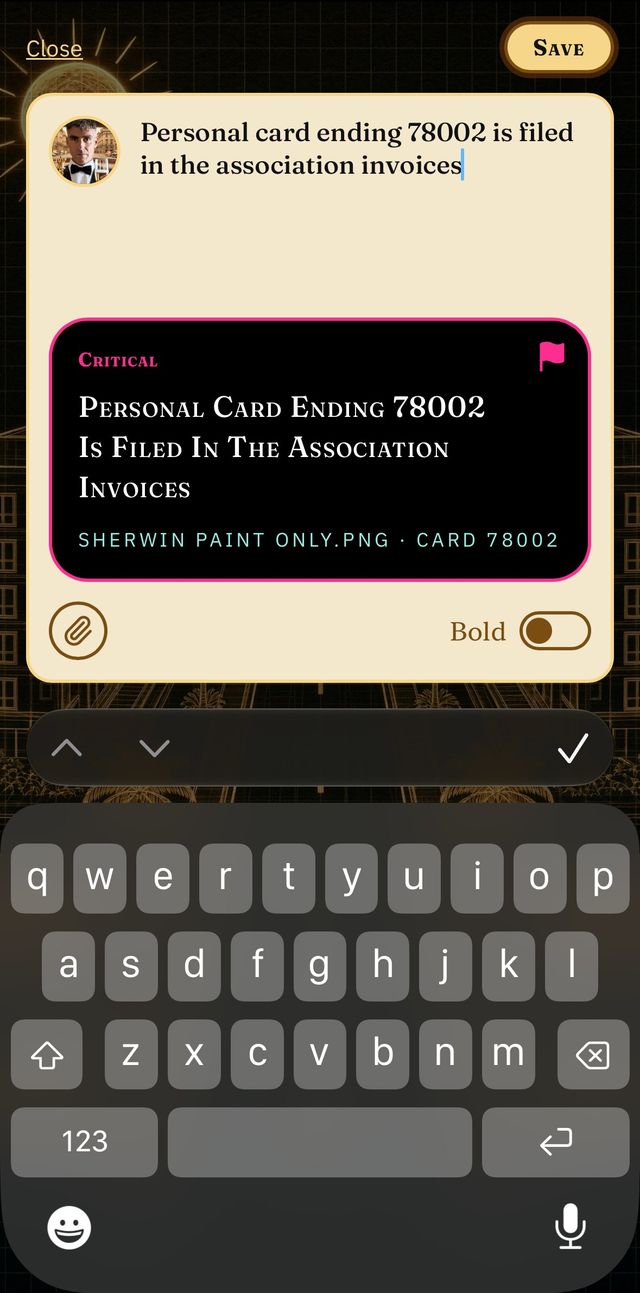
Two Cents, the private room where Miami condominium owners put the same ledger, flag, or record in front of the other owners
This is that building’s own room. Owners put the papers from the desk in front of the other owners. A page, a flag, a number, set down where the rest of the building can see it. Not a feed of strangers. The people who live under the same budget, looking at the same file.
An owner sharing a condominium desk card with the building during an HOA fraud conversation, tied to the document instead of a post with no paper
An owner shares a card from the desk with the rest of the building. The card is a paper the desk already has, not a post typed into the air. The other owners are looking at the same document the counter is looking at. The conversation stays tied to a page.
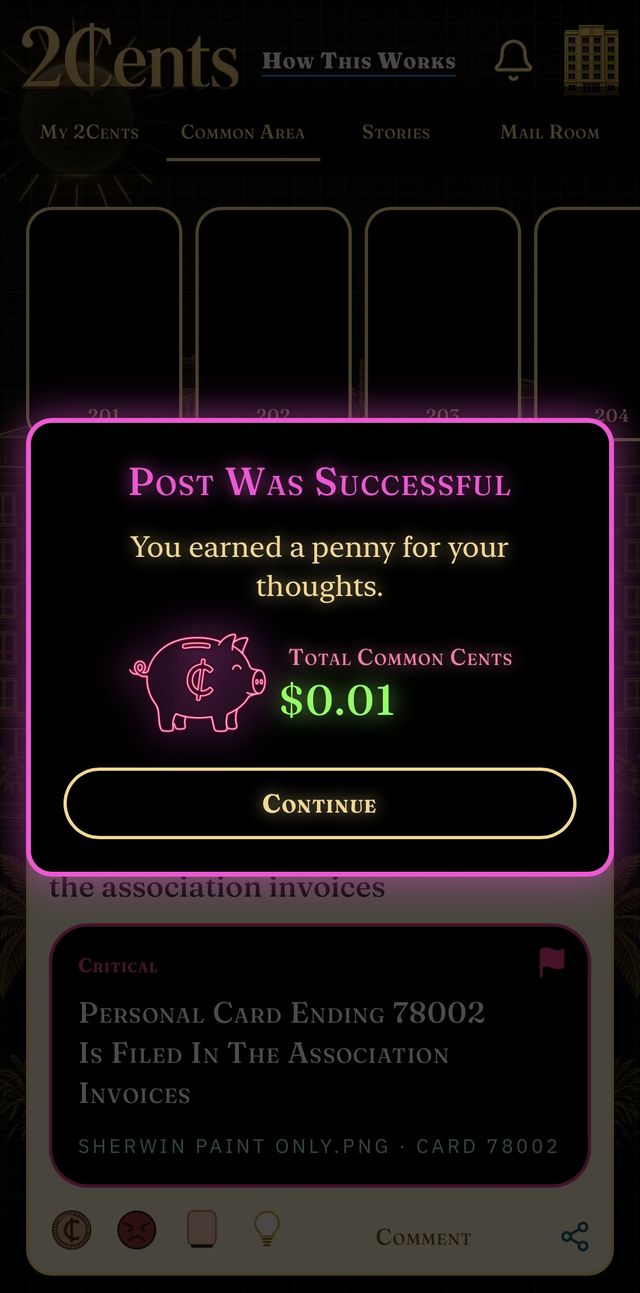
A penny marked on a condominium owner’s post inside one Miami Beach building, not a public feed and not a count that leaves the association
The post lands. A penny for the thought. The common cents add up inside that building, and only inside that building. Another owner’s mark is what adds. A mark you leave on your own post does not pay you. The count does not travel to the next association, and it does not leave the building.
Owner workspace poster for a condominium fraud case: records, flags, and the proof kept in one file

Workspace

The workspace is the owner’s own file. The investigation stays in one place. The records, the flags, and the case. It is not the association’s public desk. It is the file that owner is building, and it is still there when they come back.
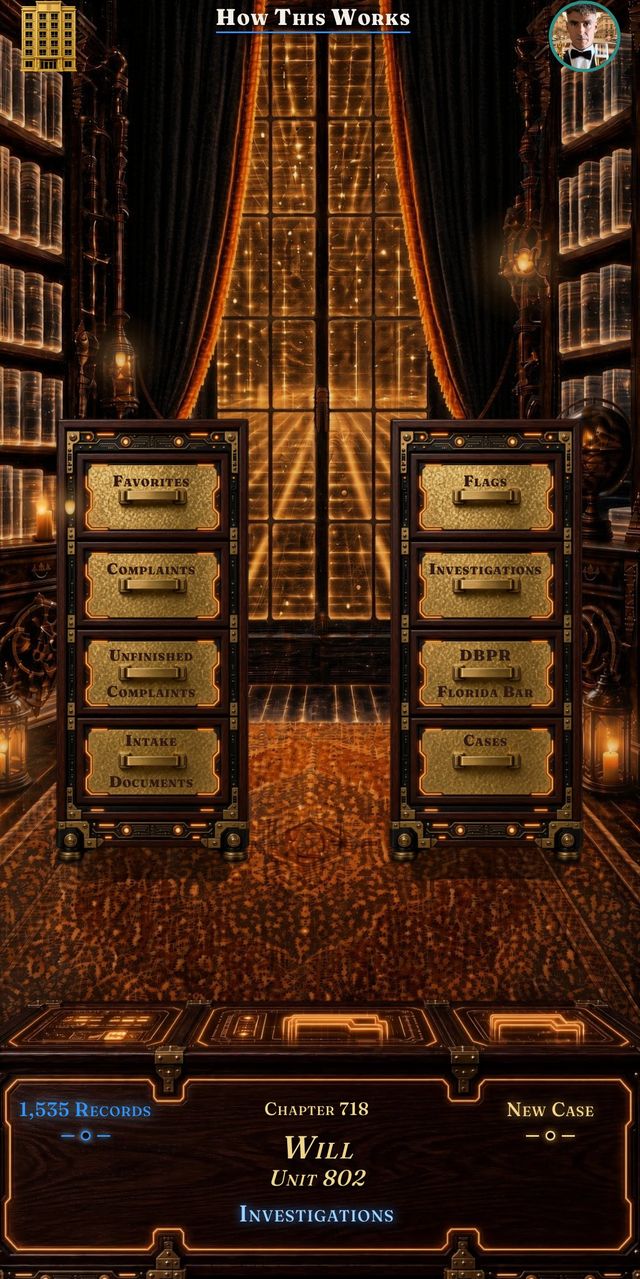
An owner’s condominium investigation file: records, fraud flags, audits, and the case, kept together for a Miami Beach HOA theft review
The owner’s own file. Records, flags, audits, and cases in one place. What you pulled from the room, what you flagged, and the question you are trying to prove, kept together so you are not rebuilding the stack every time you sit down. Leave, and the file is where you left it.
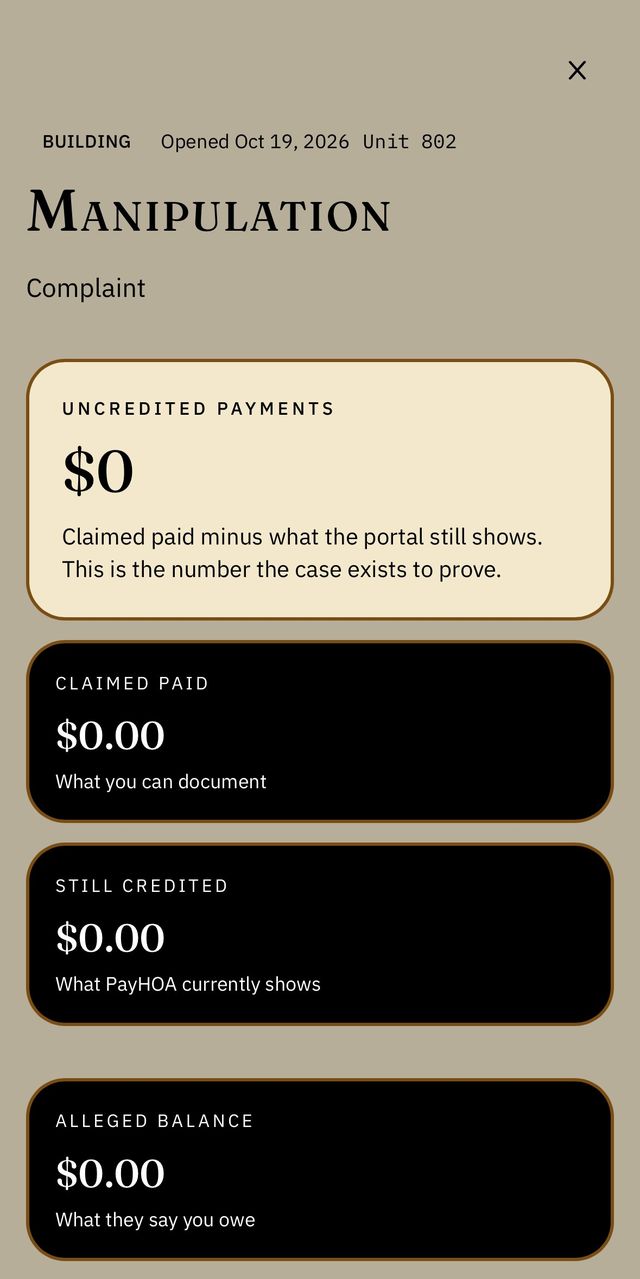
A condominium fraud case file holding the complaint, the number the claim has to meet, and the association papers that prove it
A case stays with the complaint and with the number the case has to prove. The complaint is the claim. The number is the figure that claim has to meet. The papers attached to it stay on the case. It does not dissolve back into the building’s cabinets when you leave the page. The question and the proof remain one file.
Cash register counting condominium association money during a Florida HOA fraud review

Doing the math

12 + 8 = $20

40 − 15 = $25

6 × 4 = $24

48 ÷ 6 = $8

9 + 6 = $15

30 − 12 = $18

7 × 5 = $35

36 ÷ 4 = $9

11 + 14 = $25

50 − 18 = $32

18 + 16 = $34

64 − 27 = $37

8 × 6 = $48

72 ÷ 8 = $9

125 + 80 = $205

240 + 160 = $400

310 + 145 = $455

450 + 125 = $575

188 + 212 = $400

360 + 275 = $635

500 + 125 = $625

175 + 325 = $500

420 + 180 = $600

255 + 145 = $400

390 + 210 = $600

148 + 352 = $500

600 + 175 = $775

275 + 125 = $400

333 + 167 = $500

410 + 90 = $500

520 + 230 = $750

165 + 335 = $500

280 + 220 = $500

445 + 55 = $500

500 − 175 = $325

450 − 125 = $325

800 − 325 = $475

640 − 190 = $450

920 − 410 = $510

700 − 255 = $445

560 − 180 = $380

375 − 90 = $285

850 − 425 = $425

990 − 340 = $650

760 − 215 = $545

630 − 180 = $450

540 − 165 = $375

480 − 135 = $345

410 − 88 = $322

900 − 275 = $625

720 − 190 = $530

680 − 245 = $435

550 − 160 = $390

830 − 305 = $525

125 × 2 = $250

150 × 3 = $450

175 × 4 = $700

200 × 3 = $600

225 × 2 = $450

250 × 3 = $750

180 × 4 = $720

160 × 5 = $800

140 × 3 = $420

320 × 2 = $640

275 × 2 = $550

350 × 2 = $700

125 × 4 = $500

190 × 3 = $570

210 × 3 = $630

145 × 2 = $290

260 × 2 = $520

300 × 2 = $600

175 × 3 = $525

240 × 2 = $480

360 ÷ 4 = $90

480 ÷ 6 = $80

500 ÷ 5 = $100

640 ÷ 8 = $80

720 ÷ 6 = $120

750 ÷ 5 = $150

800 ÷ 4 = $200

900 ÷ 6 = $150

960 ÷ 8 = $120

450 ÷ 9 = $50

630 ÷ 7 = $90

560 ÷ 8 = $70

840 ÷ 7 = $120

990 ÷ 9 = $110

420 ÷ 6 = $70

540 ÷ 5 = $108

360 ÷ 5 = $72

240 ÷ 6 = $40

880 ÷ 8 = $110

770 ÷ 7 = $110

1250 + 750 = $2000

2400 + 1600 = $4000

3100 + 450 = $3550

1800 + 1250 = $3050

4500 + 500 = $5000

2200 + 1800 = $4000

12 + 8 = $20

Schedule a consultation

See if Condo Counter is the right fit for your association.